Impact Stories
From our portfolio
2025 Impact Story
Synergy Contracting
Rewriting the Rules of Success
It’s not often you encounter a Latina woman leading a multi-million-dollar construction company.
“Construction is still seen as ‘men’s work,’” explains Jeysi Zuniga, Founder & CEO of Synergy Contracting, an environmental remediation, demolition, painting, and construction services company. “Every woman who gets in either pushes her way in or is brought in by chance and then has to prove she’s more competent than the men who were there before.”
Jeysi’s construction career started by accident. Born and raised in Guatemala, she moved from Pasadena, CA, to Lawrence, MA, in 2001 to be closer to family. Soon after, she gave a ride to a friend to pick up his paycheck at a construction firm. The office was chaotic, with all the workers clamoring for their checks, and she offered the owner some unsolicited advice on how to improve the process.
He hired her on the spot, and she stayed there for 17 years, learning “every single base”–accounting, HR, legal–of the small, family-owned business. Despite her contributions, she never had benefits, not even paid vacation or sick days. Finally a confrontation with her boss–witnessed by her young daughter, Sophia–gave her the push she needed to walk away.
“I saw Sophia was watching how I let myself be treated,” Jeysi recalls. “I walked out that day with nothing. Not a penny.”
Striking Out on Her Own
However, it wasn’t long before her phone started ringing, with the company’s clients telling her, “The reason we stayed is because of you.” Some even offered her money to take on their business, but she declined and decided instead to build something from scratch.
She first explored building an app for construction labor and entered the Techstars Boston Accelerator, where she met BII CEO Betty Francisco. After realizing the app would be too complex and capital-intensive, she pivoted and founded Synergy in 2019 as a woman- and minority-owned business.
Just as she got a few contracts lined up, the COVID-19 pandemic brought construction to a halt. Hospitals, however, started calling, saying they needed skilled cleaners. That led to the creation of Synergy’s hazardous cleaning division, which she says, “kept us afloat for the next two years and gave Synergy a name.”
Building a Different Kind of Business
Today, Synergy runs about 20 projects at a time across eastern Massachusetts, and Jeysi oversees a back-office team of 11. Given how she was treated at her previous job–where she didn’t have a day off for more than a decade–she encourages her employees to maintain a healthy work-life balance.
“I decided from the start that if someone was ever going to work for my company, they were going to have great pay and tons of benefits–a retirement plan, health, dental, vision, the whole nine yards,” she explains.
All field staff are unionized, allowing for cross-training and steady work. She’s even been able to secure union membership for good workers, to support their career growth and long-term financial stability.
In 2022, the painters’ union approached her and encouraged her to expand her services. The agreement, though, required significant investment upfront in labor and equipment, so she turned to BII for help.
“Betty gave me her number and said, ‘Anything you need,’” Jeysi recalls. “They came through with funding so I could buy heavy machinery for a big job.”
Ensuring a Stable Future
Last year, after an environmental assessment derailed her purchase of the building she’d been leasing for the past four years, she started to explore other options for Synergy’s headquarters. She soon found an off-market property in Lawrence, made an offer and moved in that weekend.
However, the new site–a former glue factory–wasn’t without its challenges. When the weather got warm, glue poured out of the walls and ceiling, then the roof started leaking. Construction began in July 2025 to redo the electrical and other systems. It took six workers five weeks to scrape glue off the 11,000 square-foot ceiling.
Jeysi recently paid off her initial loan to BII and is paying it forward by renting part of the building to a young Dominican car dealer, and there’s potential to add housing on the site. She also has the pleasure of working alongside her daughter, Sophia, who’s now a college student in Boston double majoring in economics and finance.
“Synergy would be nothing without the people behind it–my supervisors doing last‑minute runs, my scheduler working on Sundays, the banks and BII coming through with funding,” she says. “Synergy is exactly that, the synergy of a bunch of us trying to keep a company afloat.”
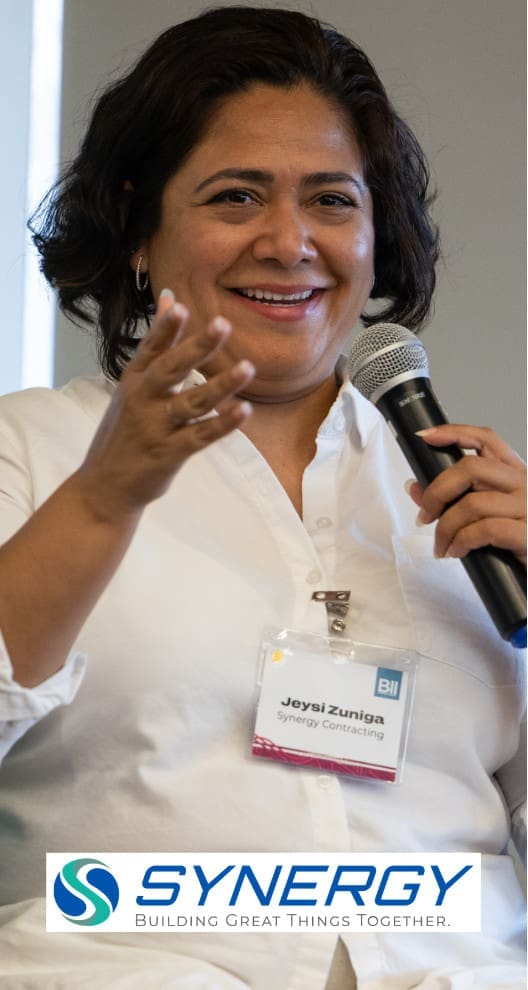
Jeysi Zuniga, Founder and CEO
2025 Impact Story
Real Estate Portfolio
Creating Thriving Communities by Investing in Affordable Housing
BII believes that in order to build community wealth and power, individuals and families need access to safe, stable and affordable housing. However, that’s especially difficult to find in Greater Boston, where the median rent for a one-bedroom apartment is roughly $3,000 per month and vacancy rates are among the lowest in the country.*
The lack of affordable housing, particularly rental units, has pushed out many long-time residents and forced others to tolerate living in sub-standard conditions. That’s why BII added several redevelopment projects to its portfolio over the past year, partnering with organizations that give residents a voice in their housing, while working to prevent displacement.
The Neighborhood Developers: Protecting Rights and Preventing Displacement
One such partner is The Neighborhood Developers (TND), which acquired a 30-unit property at the intersection of Park and Pearl Streets in Chelsea to improve living conditions and permanently preserve the homes as deed-restricted affordable housing.
“We knew the conditions were challenging and residents had been organizing for a long time,” says Steve Laferriere, TND’s Director of Real Estate. “There were residents who had been fighting code violations and rent increases for years and were at real risk of displacement.”
TND, which works to create strong neighborhoods in Chelsea, Everett, and Revere by ensuring community members have access to stable housing, first tried to buy the property in 2012 and again in 2020 but was unsuccessful both times. Unfortunately, it was purchased instead by a Chelsea landlord, who quickly raised rents while ignoring maintenance issues. Residents responded by organizing with a local community group and pursuing legal action against the landlord.
When the property went on the market again in 2024, that community group asked TND what they could do. TND, in turn, reached out to BII and worked with Investment Director Henry Noël Jr to come up with the funds needed to put in a market-rate offer. The investment was made alongside the OppCo Housing Accelerator Fund, a revolving capital fund managed by the nonprofit membership organization Opportunity Communities (OppCo).
Since closing in February 2025, TND has focused on building trust with the tenants, meeting weekly with resident services and property management, and even having one-on-one conversations with every household. They’ve also addressed urgent health and safety issues like installing security cameras, tackling a rat infestation, and completing a lead abatement process.
TND’s future plans for the property include installing solar, updating the sprinkler system and remodeling the kitchens and bathrooms. Most importantly, rents are stable, which BII’s funding helps make possible.
Steve shares that the residents are pleased so far: “They no longer have to live in fear that their rent will suddenly spike and serious conditions will never be addressed.”
Housing Corporation of Arlington: Organizing for a More Stable Community
Tenant action also played a key role in Housing Corporation of Arlington’s (HCA) purchase of a three-building property in Arlington in September 2025.
“Our top priority is to create more affordable housing so people aren’t desperately struggling with their housing costs,” says Executive Director Erica Schwarz about HCA’s mission. “But we only do that in a context of being driven by the community.”
HCA learned about the property in 2022 when City Life/Vida Urbana reached out on behalf of the property’s tenants–the nonprofit had been organizing tenants in Boston against the same owner, and learned the Arlington tenants were also facing rent increases.
“They came to us and said, ‘Could you buy our building?’” recalls Erica. They were priced out on their first attempt, but the owners eventually came back and said they were willing to negotiate. HCA still had a significant funding gap to fill, so Erica says she “called everyone she could think of.” The Hyams Foundation referred her to BII, which was able to step in and provide subordinated debt financing to close the deal.
While HCA was uninvolved in the tenants’ organizing efforts, Erica, who began her career in community organizing, says tenants’ organizing “played a key role in helping us get to a number that we could make work.”
HCA has started some renovations on the two larger apartment buildings–840 and 846 Mass Ave.–and plans are in place to replace the single-family home on the property with two additional apartment buildings. Altogether, they’ll be adding 92 new units of deed-restricted affordable housing.
She reports that tenants have been “thrilled” with the new ownership. They’ve started attending HCA’s tenant council meetings and activities, and some even came to their annual meeting. Tenants are also welcome to join HCA’s real estate committee, which gives input on new projects being considered.
“We’re all very proud that we were able to acquire this,” says Erica. “Not only are we able to have this many more affordable units for tenants who live there today, but for the next generation of tenants who will need these apartments.”
Rabbit Hole Housing Cooperative
BII is also supporting housing justice elsewhere in New England. While Portland, Maine’s average monthly rent of $2,400 is slightly lower than in Greater Boston, it’s still unaffordable for many of the city’s most vulnerable residents.**
Rabbit Hole Housing Cooperative (RHH) is working to change that by providing affordable, affirming housing for queer and transgender individuals, particularly those who are BIPOC. RHH was formed in response to persistent housing discrimination and instability faced by LGBTQ+ individuals–according to Advocates for Trans Equality, 20% of all transgender people have been discriminated against for housing.
In November 2025, BII helped RHH acquire a 7,215-square-foot property in Portland that will provide housing for up to eight founding members, with the potential to expand to additional residents over time. It will also serve as a community hub, offering space for events, creative work and connection.
According to BII’s investing team, “RHH is building a cooperative model rooted in dignity, safety, and community governance.”
Unlike traditional housing models, RHH is structured around shared ownership and democratic governance. Residents collectively manage the property through councils focused on areas such as finance, membership and maintenance, using a consensus-based approach that emphasizes transparency and accountability. A low-cost buy-in structure, paid over time, ensures accessibility while building long-term community ownership.
Together with projects like those led by TND and HCA, Rabbit Hole demonstrates how community ownership models can play a critical role in preventing displacement and building more inclusive, resilient neighborhoods.



Steve Laferriere & Nancy Turner
Erica Schwarz, Executive Director
2025 Impact Story
88 Acres
Growing a People-Centered Food Business
88 Acres Co-Founder and CEO Nicole Ledoux recalls that one of her first interactions with BII was sitting down with Founder Deborah Frieze at her kitchen table more than 10 years ago to discuss building a different kind of food business.
“Deb had this vision of partnering with companies that were doing business for good and blending in social impact as part of a company’s DNA,” recalls Nicole, who co-founded 88 Acres with her husband, Rob Dalton. “Right from the start, we thought, ‘She gets it.’”
From its humble beginnings in Nicole and Rob’s Boston apartment, 88 Acres, which makes protein bars and seed butters free from the top nine major allergens, has prioritized its people. In fact, when they moved the company from their Dorchester location to a 30,000-square-foot bakery and warehouse in Canton in 2023, they retained 100% of their employees.
“We want to create roles that feel like careers, not just jobs that you punch in and out of,” explains Nicole, who now oversees a staff of 70–many of whom have referred their friends and family members to the company.
Nicole shares that over the years BII has offered them guidance on everything from workforce development grants to workplace safety during the onset of the COVID-19 pandemic. More recently, Samalid Hogan, BII’s Director of Business Support Services, helped her successfully apply for a Massachusetts Food Security Infrastructure Grant (FSIG).
According to Nicole, winning the grant has been “truly transformational.” It funded the purchase of critical equipment that improves product consistency and reduces food waste, two key factors in their continued expansion–you can now buy 88 Acres products at any Northeast region Costco, and their first retail partner Whole Foods added their Cookies & Cream bar to shelves nationwide.
“BII has been our most impactful investor,” says Nicole, adding that she’s especially thankful to BII for connecting her to like-minded investors and other portfolio companies. “They set the culture and foundation for who we wanted to be.”
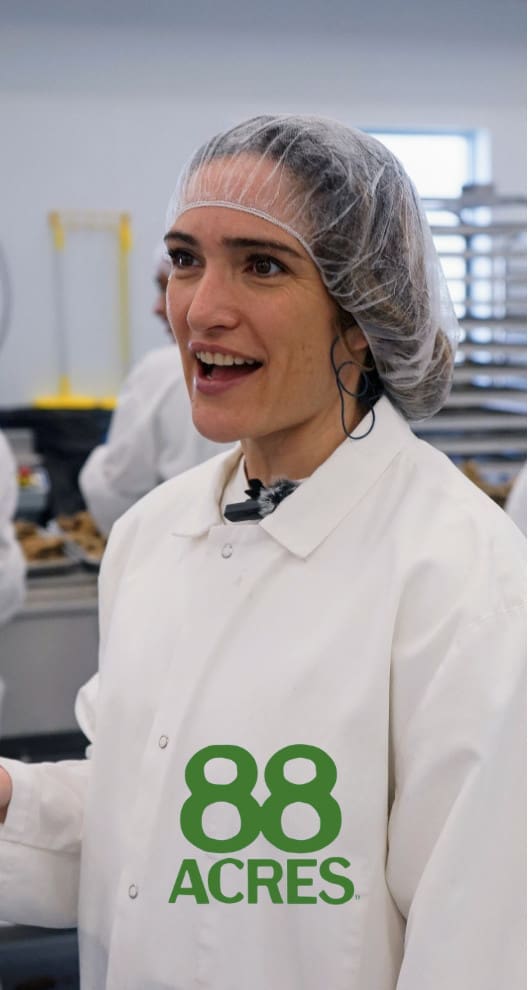

Nicole Ledoux, Co-Founder and CEO
2024 Impact Story
And Still We Rise
Many people from diverse communities struggle to find mental health providers who understand them and their unique experiences. That’s what Dr. Natasha Holmes set out to change when she founded And Still We Rise (ASWR) in 2018. “Here, clients don’t have to spend time explaining parts of their identity,” says Dr. Holmes about her practice, which has offices in Boston and Cambridge, MA, and Bellevue, WA. “That saves emotional labor and makes room for deeper healing.”
She hired her first employee in March 2021 and just four years later, she employs a team of 80 clinicians–about 90-95% identify as members of marginalized communities, which she considers to be “invaluable.” To confront inequalities on a systemic level, ASWR also offers a wide range of consulting services to schools, government agencies, and nonprofits. The rapid growth of ASWR–the practice served more than 1,000 clients and conducted roughly 30,000 sessions last year–combined with limited access to traditional capital, forced Dr. Holmes to take on high-interest loans from predatory lenders to cover her increasing expenses. “Stressful is an understatement,” she recalls.
Then her executive assistant met CEO Betty Francisco at an event in spring 2023. By spring 2024, BII and the Black Economic Council of Massachusetts (BECMA) had invested $325,000 in the practice–BII provided a $250,000 loan to refinance the existing debt with more favorable terms and BECMA provided a $75,000 working capital line of credit. “The funding helped us build infrastructure so we can keep growing, without compromising our mission,” says Dr. Holmes, noting that it allowed her to make some strategic hires and technology upgrades, as well as build an internal leadership pipeline. “I don’t suspect we would be here without the support of BII and BECMA.” Now on solid financial ground, Dr. Holmes’ plans for the year include starting profit sharing, launching a feasibility study around employee ownership of the entity, and expanding the consulting practice–all while prioritizing the health, safety, and well-being of her clients. “We’re not just providing therapy,” she says. “We’re shifting the mental health narrative. We’re saying, ‘You matter. Your story matters. And your healing is powerful.’”

Dr. Natasha Holmes, Founder and CEO
2024 Impact Story
Eco Auto
The idea for Eco Auto came to husband-and-wife entrepreneurs Al and Michelle Salas when they realized entire communities were being left out of the booming green vehicle market. “Sustainability in transportation is a privilege,” says Al, who was born in the Dominican Republic and came to the U.S. about 20 years ago. “It’s not democratized.” Founded in Tewksbury, MA, in 2022 with the goal of making pre-owned green vehicles accessible to all, Eco Auto has quickly become one of the fastest-growing used car dealerships in the state. In just two years, its sales of pre-owned hybrid, plug-in hybrid, and electric vehicles (EVs) jumped from $188,000 to $18 million–offsetting about 2.5 million pounds of carbon in total.
Eco Auto’s mission is guided by what Al calls its “triple net impact:” net profits, net zero emissions, and net community benefits. Unlike other dealerships, its salespeople don’t work on commission. Instead, they take a consultative approach with buyers, who are often low-to-middle income, to determine what kind of green vehicle would be best for their lifestyle.
To extend the life of existing EVs and reduce waste, the dealership offers battery repairs and refurbishment. “Not only are we providing access,” Al explains, they’ve saved customers over $1.5 million in rebates, and “we’re also extending the longevity of these vehicles on the road.” Eco Auto is also committed to educating consumers about green vehicles, advocating for the right to repair EVs at the state level, and increasing the availability of chargers in lower-income communities. They recently worked with the towns of Clinton and Gardner in Central Massachusetts to add electric charges.
To make room for the new inventory, Al and Michelle are expanding Eco Auto’s headquarters to the lot next door. Their new space will feature a solar canopy to power the chargers. Also in the works is Eco Auto’s first franchise location in Seattle, Washington. As Eco Auto continues to expand, Al says its purpose will remain the same. “At the end of the day, it’s about what’s best for the environment and what’s best for the communities.”
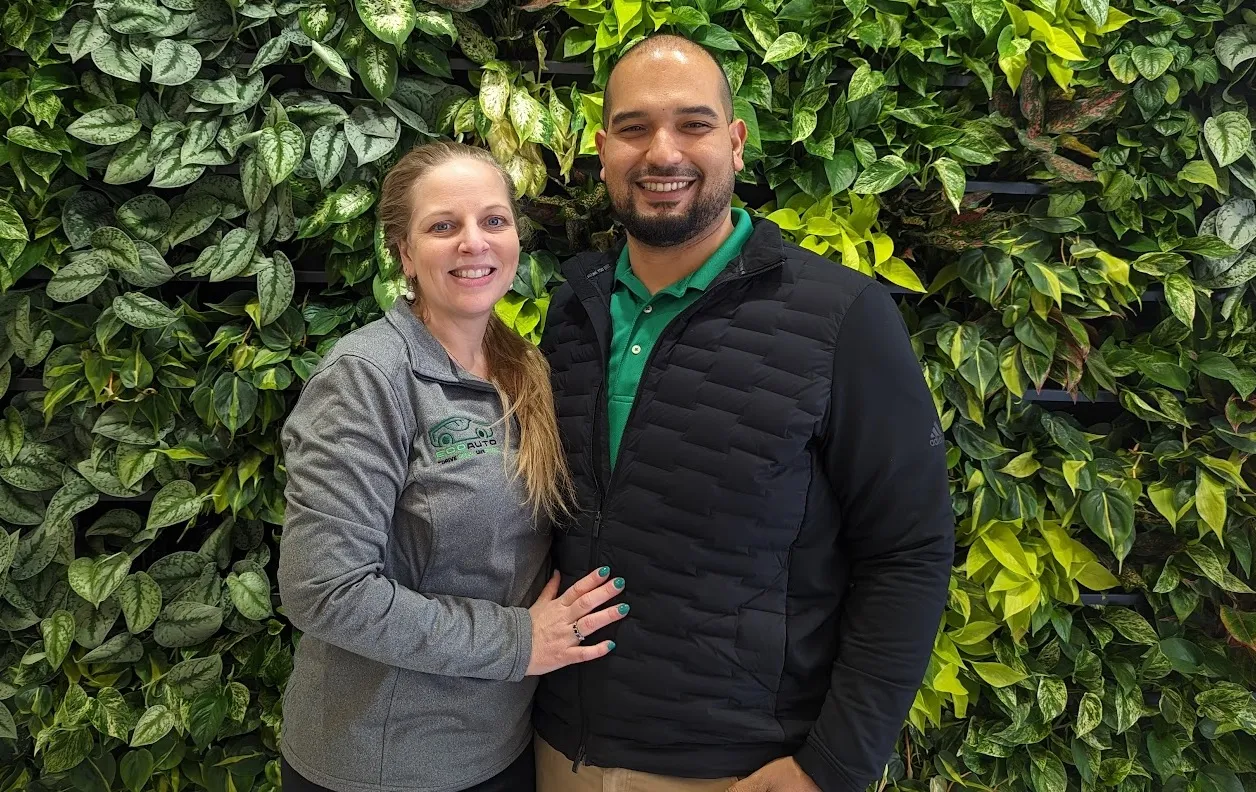

Al and Michelle Salas, Co-Founders
2024 Impact Story
Wash Cycle Laundry
A business’s most important asset is people, which is not lost on the founders of Wash Cycle Laundry, a commercial laundry and linen rental service. Since its humble beginnings in 2010 in West Philadelphia, the company now has upwards of 150 employees in both Philadelphia and Lynn, MA–in 2017, BII made an equity investment to support its expansion to New England. As it’s grown, it has retained its triple-bottom line focus: clean laundry, clean planet–bikes used for deliveries–and, most importantly, clean slates.
“There are not many jobs like this available to people who speak limited English or who don’t have traditional work experience,” says Director of Social Impact Fredy Hincapie, adding that the majority of Wash Cycle employees are transitioning from homelessness, incarceration, and long-term unemployment. “Our goal has always been to lower those barriers, while still running a successful business.”
Wages start at $18.50 an hour, which is higher than the MA minimum wage. Benefits include short-and-long-term disability, paid time off (PTO), and employer-paid healthcare. As a fun perk, employees get eight extra hours of PTO on their birthdays. There’s also a strong culture of promoting from within–most managers are in supervisory roles for the first time, so Wash Cycle brings in HR experts for professional development workshops.
ESL classes are one of the most popular employee programs at the Lynn location. Held during the slower winter months, these classes are offered during the work day at full pay, thanks to grant funding. “Employees tell us how life-changing it is to attend a class they’d otherwise never have time or money for,” says Fredy. “They’re always asking when the next session starts.”
Through an in-house payroll advance program, employees who’ve completed 90 days can borrow up to one week’s wages – interest-free and without a credit check– to help cover bills when times are tight. Since the program launched, Wash Cycle has issued over 170 advances totaling nearly $204,600, with a repayment rate of over 99.2%.
Employees are referred to Wash Cycle through a variety of hiring partners in each location, such as Roca in MA and Fair Chance Hiring Initiative in Philadelphia. These organizations also provide case management support when employees are struggling.
“If someone is having a hard time, we don’t go straight to write-ups,” Fredy explains. “We call their case manager and ask ‘How can we support this person?’ and then figure out a solution.”
Looking ahead, the company plans to expand its MA location, and explore the launch of an Employer Resource Network (ERN) with other local businesses. Through this model, a shared “success coach” would help employees navigate stressful personal issues like finding an affordable apartment or childcare, or applying for food stamps. “There’s no trade-off between treating people well and running a strong business,” says Fredy. “In fact, we’ve found the opposite to be true.”
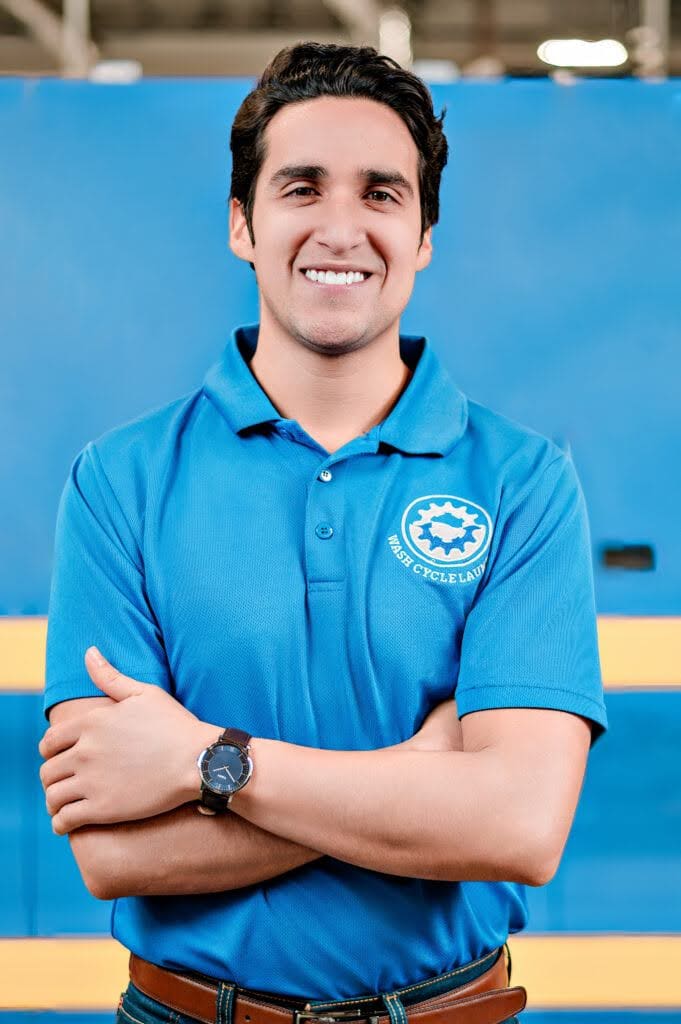
Fredy Hincapie, Director of Operations
2023 Impact Story
Valley Home Insulation
Across Massachusetts, homeowners and renters alike can get free home energy audits, free air sealing if needed, free or heavily discounted insulation, and large rebates on heating and cooling system upgrades through a program called Mass Save. For the 1.3 million households in the state who struggle to pay their energy bills, the upgrades can be transformative. Yet many have no idea it exists or that they qualify, especially in low-income and immigrant communities. Valley Home Insulation is changing that, focusing on Spanish-speaking households in Lawrence and nearby cities.
“There’s been such a large gap in people getting services,” says founder and president Abel Vargas. “We’ve been able to tap into a market that hadn’t been spoken to the way we’re able to speak to them.” From outreach, to scheduling, energy assessments, insulation installers, plumbers and electricians, all the work is done by people who not only speak Spanish, but share customers’ culture and local ties.
Through partnerships, referrals, and a loan and business coaching from BII, VHI has grown quickly to five trucks and over 30 employees. You build a team of passionate, capable people, regardless of whether they speak English, and that helps us penetrate the market,” Vargas says. “Part of it is empowering people that oftentimes aren’t told ‘You’re important, your skill set is critical,’ beyond being good on computers or writing a good email.”
By reducing energy demand, VHI is also reducing carbon emissions – and a team is now training to install heat pumps as well, a key step towards ending fossil fuel use. But when talking with customers, they don’t focus on the climate. “La cuenta – saving money is the thing,” Vargas says. And after they’ve sealed up a home, the winter heating bills can potentially drop by hundreds of dollars per month.
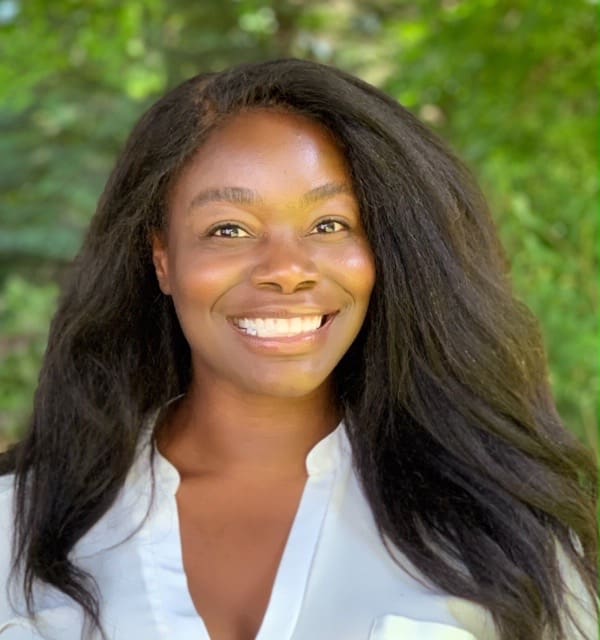
Omolara Fatiregun, Founder & CEO
2023 Impact Story
Nuevo Día
On a sunny Wednesday in April, the lunch menu at Nuevo Día Adult Day Health Center was straight out of Santo Domingo: albóndigas de pescado (savory fish meatballs), arroz con gandules (rice with pigeon peas), tayota (chayote) salad, and fruit salad for dessert. It was decidedly not the fare typically served at most elder care facilities, which is known for its blandness. This meal came from Merengue Restaurant a few blocks
away, which Nuevo Día has contracted with to prepare savory Dominican-style food – just on the healthier side (so alas, no fried maduros) and with careful portion control. Venezuelan and Cuban dishes are also available.
“It’s important to provide food that participants like, because they’ll eat it,” says Carissa Figueroa, who co-owns Nuevo Día with three fellow Latinos, all health care veterans. Culturally appropriate food is crucial for good nutrition, she explains, and it also makes elders feel understood and truly cared for. “We have a lot of different cultures here, and we try to reflect that in the food, the music we play, the activities we do, the celebrations that we have, so that people feel heard and respected,” Figueroa says. The staff reflects the diversity of Latin America, and elders are treated like family, not patients.
Adult day health centers play a key role in elder care, providing a way for people with illnesses, limited mobility, balance issues, memory loss, early-stage dementia and other challenges to keep living in the community instead of going into a nursing home. As more and more Latino immigrants reach old age in the U.S., it is crucial that they have access to high-quality, culturally informed care, Figueroa says. This is why she and her partners decided to open Nuevo Día. “We realized there was a huge need, and services were being provided, but not at the level of quality we could provide. That’s why we said, ‘Why not us? We know the client; we know the culture.’”
The 8,000-square-foot center, at the border of Roxbury and Jamaica Plain, opened in mid-2022, with BII investment and support, and now serves over 70 people every weekday, all Latinos, from their 60s to their 90s. It’s a lively, colorful, sometimes boisterous place where care is delivered in a package of fun, creativity and social interaction. “We’re dedicated to fostering an environment of care, respect and support, and our services play a pivotal role in enhancing the quality of life for those we serve,” Figueroa says. Working with BII, Nuevo Día has also articulated key objectives for impact, including living wages for staff and support for small, minority-owned businesses, who make up 90% of its vendors. “At our core, we exist to uplift our community,” she says, “and this is reflected in every aspect of our operations.”
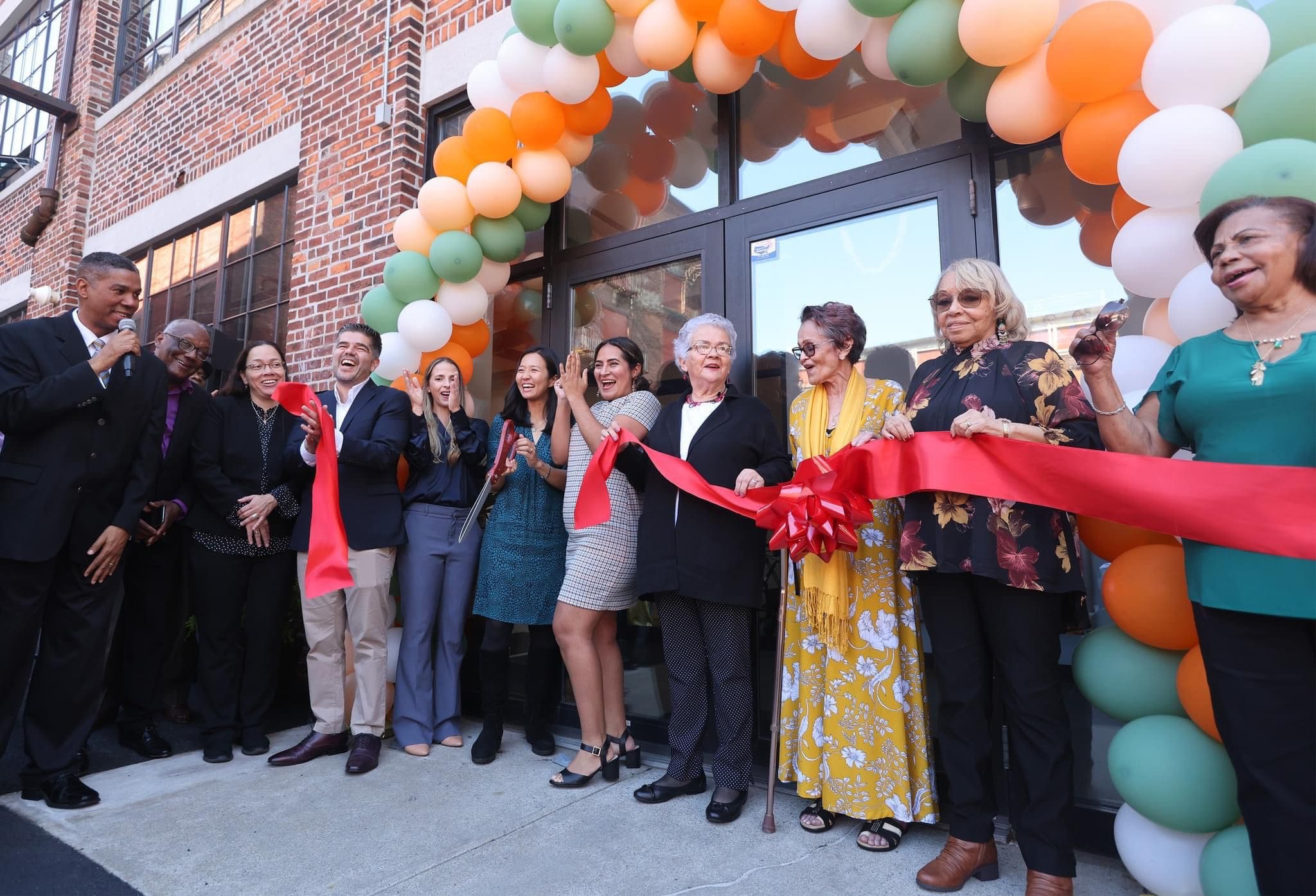
Carissa Figueroa, Director
2023 Impact Story
Roundhead Brewing
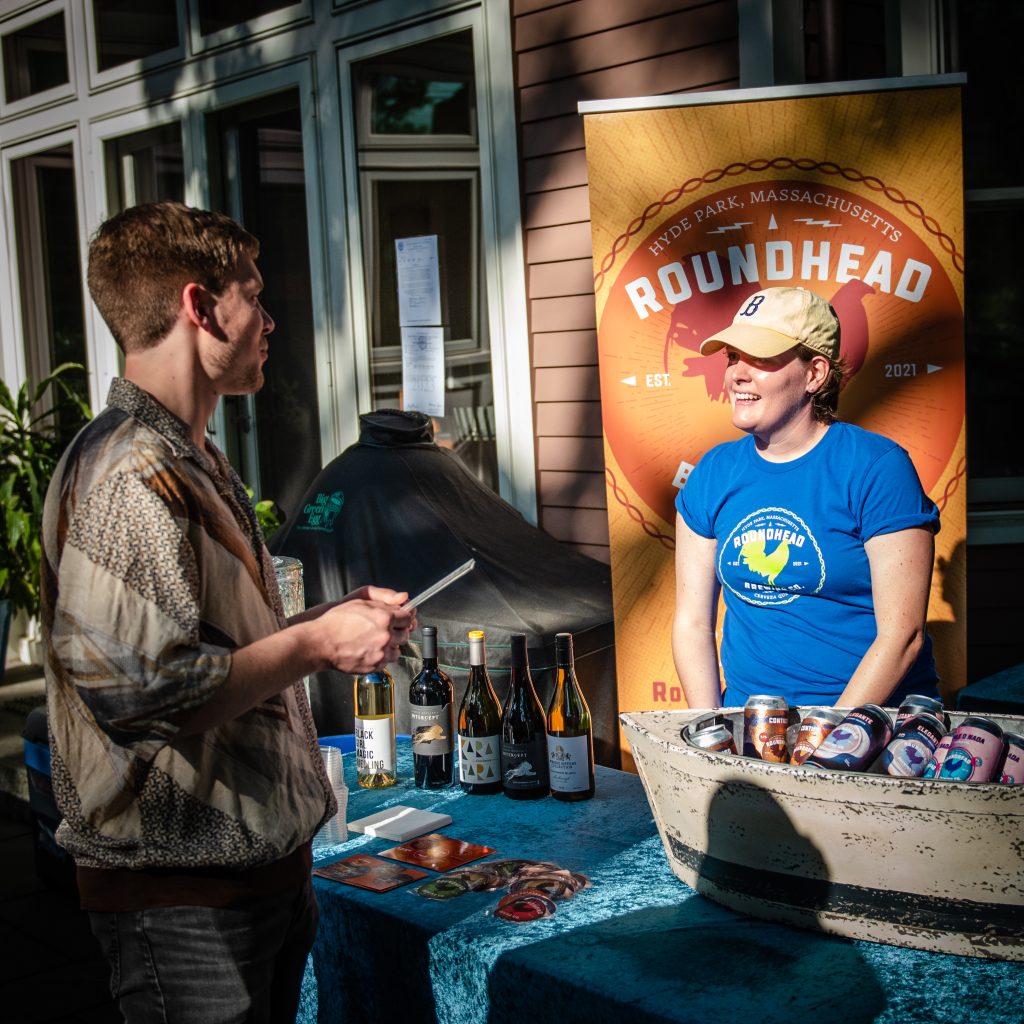
When Craig Panzer and Luis Espinoza were preparing to open Roundhead Brewing Company in Hyde Park, they wanted to pay their workers fairly. Their plan was to track employees’ wages and tips and, if they fell short of an hourly minimum, make up the difference.
BII Board Member Mike Leyba pushed them to go further and abolish tips. “It was more challenging for us, but we realized it was the right thing to do,” Panzer says. “Tips change the power dynamic between customers and staff.”
The task then was to develop a viable alternative to tipping. Panzer worked with BII Impact Director Aliana Piñeiro and Senior Associate Zack Neville Young to come up with a plan. They settled on a 20% administrative fee and a 3% benefits fee to be added to all guest checks.
The 20% fee makes it possible for Roundhead to pay a starting wage of over $22 per hour (based on MIT’s Living Wage Calculator), which is more than triple the Massachusetts tipped wage (currently $6.75). The brewery calculates the difference between the two wage levels and retains that amount from the fee revenue, based on the hours each person worked. When there is a surplus, it is shared by all the employees, just as pooled tips would be.
“This way we can guarantee living wages, while closing the gap between the front and the back of the house, ensuring that each role at Roundhead Brewing is truly valued,” Panzer says. The 3% benefits fee, meanwhile, has enabled Roundhead to offer more generous benefits, such as dental insurance and retirement funds.
“This quality of life is something every member of the restaurant industry deserves, just like workers in other industries,” Panzer says. “We believe in taking care of our local community, starting with our workers, and we’re proud to be making an impact through our wage policy.”
Craig Panzer and Luis Espinoza, Co-Owners
2022 Impact Story
Rozki Rides
East Boston has the highest concentration of Latinos in the city: 50.4% as of 2020. Immigrant and working-class families found affordable, transit-connected housing here and built a vibrant community between the highways, airport and sea.
The real estate boom in Greater Boston has dramatically changed the neighborhood, however. Rents have risen steadily, and new luxury apartment and condo complexes are proliferating.
So when Tanya Hahnel, project manager at the East Boston Community Development Corporation, saw a portfolio of triple-deckers with 114 units for sale in the neighborhood, she knew that dozens of families were at risk of displacement. But she also saw an opportunity, so she reached out to Mike Leyba, co-executive director of City Life/Vida Urbana.
The two nonprofits had already partnered once to buy and preserve some affordable units in East Boston. And Leyba was already in a fellowship program – alongside BII’s Investment Director, Henry Noel Jr – to explore ways to acquire more properties, and had been learning about the Kansas City-based nonprofit Trust Neighborhoods’ use of mixed-income neighborhood trusts (MINTs) to buy and preserve affordable housing.
The East Boston houses were listed for $47 million, and the nonprofits knew they would be competing with developers eager to buy them. They could secure some financing through the City of Boston, but they still had to raise millions more from private sources. That’s where BII came in – and BII board member Lisa Owens, executive director of the Hyams Foundation. The Boston-based foundation focuses on increasing economic, racial and social justice and power within low-income communities. Owens used her connections to engage other funders, and she and the BII Investment Committee worked to shape the MINT to make the units more affordable, permanently. They also ensured inclusive governance through a trust stewardship committee that includes residents and local community organizations.
The deal itself was built on an integrated capital stack that combined debt, equity and grants from public and private investors, including subordinated loans from BII and philanthropic institutions, to mobilize a total of $52.5 million. It was also deliberately based on trusting relationships: BII and City Life convened impact investors, city officials and philanthropic foundations in Boston, encouraged them to get involved, and shared BII’s analysis and due diligence to make it easier for foundations, philanthropies and other investors to participate.
“This was our first real estate transaction through BII’s Fund II, and we see enormous potential to do more,” says BII CEO Betty Francisco. “Community ownership and control not only protect affordable housing, but also keep the revenue and wealth these projects create within their neighborhoods. That is the kind of transformative change we need, in Boston and beyond.”
Jessika Rozki, Owner/CEO