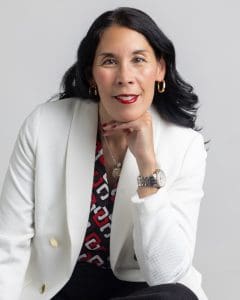
 By Betty Francisco, CEO, Boston Impact Initiative
For thousands of families in Massachusetts, economic security is less of a cushion and more of a thin line. While our Commonwealth is among the wealthiest in the nation, that prosperity is held by a few, while many others live without a safety net. This stark reality is at the center of the Federal Reserve Bank of Boston’s 2025 Massachusetts Economic Conditions and Household Opportunity Survey (Mass ECHOS), a first-of-its-kind dataset that provides a full picture of the assets and debts held by families across demographics, including age, education, place, and race.
What the data tells us
Mass ECHOS analyzes family wealth as a measure of long-term financial security and well-being. Family net wealth in Massachusetts is unevenly held. Net wealth is the value of a family’s assets, including cash in banks, real estate and retirement accounts, minus the value of all debts such as student loans, mortgages, and credit card debts. The median net wealth for Massachusetts families is $374,000, while a quarter of families hold $10,000 or less and the top quarter holds $1,090,000 or more. Median family net wealth is the midpoint: half of families have more, and half have less.
Racial disparities are stark: median net wealth is $549,200 for white families, compared to just $7,800 for Black and $1,200 for Hispanic families. Even at the top of the distribution, the gap remains: the top quarter of white families hold at least $1,318,500 versus at least $267,300 for Black families. Roughly two in five Hispanic and one in three Black families report zero or negative wealth (meaning their debts are greater than their assets), compared to one in nine white families. Furthermore, 15.7% of families report zero or negative wealth and 35% cannot cover a $400 emergency.
The pattern sharpens in the Gateway Cities, the communities at the center of BII’s work. There, median family wealth is $101,500, compared to $373,400 in Greater Boston, and the bottom quarter of families hold nothing at all. Half cannot cover a $400 emergency, median liquid savings are just $5,000, and once home equity is set aside, the median family holds $1,100 in financial wealth.
The takeaway from the ECHOS report is that Massachusetts has real wealth. Yet, significant structural inequalities remain along racial and economic lines. Wealth in Massachusetts is built through a few well-known channels: home equity, retirement accounts, and family transfers. These channels have narrowed or closed in many of the communities BII serves. Fewer than half of Gateway Cities families own their homes, more than half have no savings in retirement accounts, and just 7%of Gateway Cities families have ever received a monetary gift or inheritance. Many families, especially Black and Latino households, are without a financial safety net in one of the richest states in the country.
The report is descriptive by design. It does not say why these gaps exist. But we work in these communities every day, and we know the history: redlining, credit exclusion, and decades of disinvestment did not simply deny families wealth. They denied families the channels for building it. Closing the gap means building those wealth channels, and that is integral to BII’s investing work.
Where the data meets our work
Data like this tells us where families are starting. What we do with it is a choice about where investment capital goes and who controls it. At BII, we believe in investing capital alongside building worker and community power. First, investments in community ownership direct capital to projects that sustainably meet community needs and expand asset ownership, especially in working-class communities of color and communities from which wealth has been extracted. Second, investments in community governance support the structures and practices that give communities leadership, accountability, and control over finance as a shared resource. That’s where BII’s work lives. Ownership and power, together.
- Business ownership: capital that meets people where they start.
Most investors ask a founder to have skin in the game. That often means putting in 10-20% of their own savings or putting their house on the line before a lender or investor will consider them. That’s why so many capable entrepreneurs never receive a first loan. It is not for lack of talent or ambition, but limited family wealth. Mass ECHOS puts a number on that constraint: only 13% of Massachusetts families statewide have ever received a monetary gift or inheritance, and in the Gateway Cities it’s just 7%. The friends-and-family round that launches so many small businesses simply does not exist for many of the entrepreneurs we serve.
Capital providers need to understand the starting point. As place-based investors, we collaborate with entrepreneurs and local leaders to understand their unique challenges and co-create solutions. That’s why we don’t use credit scores, require collateral or personal guarantees, because these requirements quietly favor those who already have wealth. When most wealth is locked inside the homes people live in, lending against collateral shuts out nearly everyone else. When we underwrite loans, we bring a trust-based approach that focuses on the strength of a business’ community relationships and an entrepreneur’s lived experience. That approach is woven into BII’s $20 million in cumulative investments across 100 small businesses, cooperatives, and real estate projects that sustain nearly 1,000 jobs today and generate over $121 million in annual revenue.
- Employee ownership: Building equity and wealth through work.
The data reveals that 40% of families statewide have no retirement savings at all. At BII, we see this gap as a call to expand savings opportunities and grow employee ownership. We support our portfolio companies in creating living-wage jobs that offer strong benefits and opportunities for retirement savings. More importantly, we work with founders to turn workers into owners.
The ECHOS report also shows that wealth in Massachusetts is concentrated in older generations. For many older owners, a meaningful share of that wealth is the value of the businesses they built. Over 200,000 businesses in New England will change hands in the next decade. Without intentional succession planning, these businesses risk closing or being sold to out-of-state buyers. As a founding partner of the North East Transition Initiative (NETI), a regional collaborative working to make employee ownership a standard exit option, BII is working to convert retiring businesses into employee-owned enterprises. This keeps jobs local, maintains community stability, and builds generational wealth for the workers who created the business’s value.
- Housing: Stable rents as the on-ramp to homeownership.
The data is clear: homeownership is the primary driver of generational wealth in Massachusetts. Wealth is concentrated among homeowners, who hold a median net wealth of $790,500 while renters hold just $1,500, with 40% reporting zero or negative wealth. However, achieving ownership is nearly impossible for many. With the average rent at $3,200, two-thirds of renting families cannot afford the $9,600 typically required to move, and many remain rent-burdened. Affordable rent is the essential bridge that creates the stability required for future homeownership and wealth building.
BII addresses this by investing in community-controlled real estate to prevent displacement and ensure long-term affordability. We have invested $2.6 million in real estate projects, sustaining over 800 units of affordable housing. Our forthcoming investment with the Boston Neighborhood Community Land Trust brings both halves together. It will build six permanently affordable condominium units in Dorchester, MA. Six families will cross from renting to owning, at a price they can afford in a neighborhood they already call home. By keeping land in trust, we ensure these homes remain affordable for families today and for future generations, proving that strategic investment can turn renting into a path toward homeownership.
What we are asking for: move capital at scale to close generational wealth gaps
A report like this one can catalyze new solutions that build shared prosperity. How we choose to invest our capital reflects our values and is a decisive choice about who holds power in our communities.
Deepen philanthropy’s role, and change its shape. Grant capital gives us the capacity and the time to build resilient, impactful enterprises that deliver lasting returns. The institutions that funded Mass ECHOS already understand this. Philanthropic partners can accelerate wealth creation by shifting from funding programs to funding ownership: first-loss capital, guarantees, recoverable grants, and unrestricted operating support that enable a fund like BII to invest in entrepreneurs no one else will underwrite.
Scale the infrastructure for equitable access to capital. The unwritten rules that determine who receives investment often reflect choices about who is allowed opportunity. Credit score minimums, collateral, and personal guarantees favor those who already have wealth. Impact investors and community lenders can offer the patient, flexible, trust-based capital that ambitious entrepreneurs need to get off the ground and thrive. Banks, foundations, corporations, pension funds, and public agencies can accelerate long-term economic mobility in overlooked communities by moving serious capital into small businesses, homeownership, and neighborhood development.
Build the coalitions and the field to transform the flow of finance. No lender, foundation, agency, or chamber can close historical wealth gaps alone; real change happens when business, labor, government, and community organizations advance asset building, ownership, and investment in overlooked communities together. BII also builds the field beyond Massachusetts: through our Advancing Regenerative Capital (ARC) Fellowship, we train justice-aligned fund managers nationwide, most of them women and people of color, who have launched 29 impact funds across the U.S. and Canada. What they need now are first movers: early believers willing to provide flexible capital and operational support so community-led solutions can prove their models. We invite partners across sectors to build this with us.
At BII, we envision a future where every community has the resources and power to create shared prosperity. Mass ECHOS tells us where we stand today. It gives us a baseline. Ten years from now, we will be able to answer an honest question about whether or not we moved. What we do next is up to us.
Betty Francisco is CEO of Boston Impact Initiative. She serves on the board of directors of the Federal Reserve Bank of Boston. The views expressed here are her own.