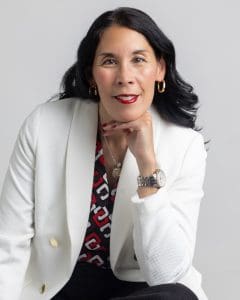
 By Betty Francisco, CEO, Boston Impact Initiative
This fall showed us what happens when people build together. We welcomed the 6th cohort of ARC Fellows, bringing our network to more than 100 leaders launching impact funds in their own communities. We gathered our portfolio leaders at the BII Leadership Summit, hosted the ARC Summit, and celebrated with T25’s integrated capital funds at SOCAP. In Denver, we led an integrated capital card workshop at the Resist & Build Summit with solidarity economy organizers from across the country. [Add one line on who joined or what they built.] This is relational infrastructure: the networks and shared learning that move our field from individual efforts to systemic change.
The Field of Impact First Funds is Growing
We partnered with Impact Finance Center to host MA Impact Days, a conference to mobilize private wealth for Massachusetts communities. Members of the BII community, including Deborah Frieze, Lubna Elia, Lisa Hayles, and I were honored in the Who’s Who in Impact Investing. The conference goal is bold: move 1% of Massachusetts’ $9 trillion in private wealth toward housing, climate resilience, community development, and the arts. That is $90 billion. Here is what we took away:
- We have enough capital. A fraction of that 1% could build much of the 222,000 homes we need and fund hundreds of local businesses.
- Investors are all of us. Massachusetts has led the field for over a century, from cooperative banks to the CDFI movement to today’s place-based economic justice investing.
- Investors are activated, not born. Buying locally, banking at a credit union, giving to a nonprofit, or investing in a community fund like BII all move capital toward the future we want.
What it really costs, and what it builds
Our investing activity over the last few years has taught us a great deal about what it takes to move capital for community ownership and shared wealth-building. The biggest lesson is that philanthropy is not an add-on to this model. It is part of how the model works. There is a growing conversation in our field that asks what it actually costs to move capital to the people, enterprises and communities that have been disinvested and overlooked by traditional finance, particularly in communities of color. It is the work Capshift calls “impact maximizing strategies.”
The Miller Center’s 2026 study on The True Cost of Impact First Investing found that impact first funds spend about 21 cents to deploy each dollar, compared with an assumed 8 cents for traditional funds, and that figure counts operating costs only, before losses, interest paid to investors, or donated services. That higher cost is not inefficiency. It’s the work of inclusion: smaller deals, flexible terms, coaching, trust, translation, and patience.
At BII, our investing work costs more than it earns, by design. Here’s why: We are patient. We spend time getting to know entrepreneurs and preparing them for capital. Our diligence is built on relationships, not credit scores or personal guarantees, and that takes time and trust. Our terms are fair, and we charge no fees for capital or for support. When a business hits a hard season, we defer and restructure rather than call the loan. We never pass that cost to entrepreneurs through fees or extractive terms. And sometimes, despite everyone’s best efforts, a business closes. Taking that risk, and funding it in advance, is part of what this work costs. Every investment includes technical assistance and coaching, before the check and long after. And support comes from our team who is proximate, bilingual, and trusted in the communities we serve. We measure and manage our impact and share our learnings with the field through our ARC fund manager education program. Every one of those has a cost. Philanthropy subsidizes the difference between what the work costs and what it earns. It also makes room for community members, including people who are not accredited investors, to invest alongside foundations and family offices.
Our approach is working. Since launching BII Fund II in 2022, we have invested $10.4 million in fair, flexible capital across 30 enterprises and community-controlled real estate projects. Today our portfolio includes 818 affordable homes built or preserved, up from 114 as we expanded our real estate investing; our companies have raised more than $189 million in follow-on capital, up from $90 million; and our portfolio supports about 1,000 jobs, with 74% of businesses owned by people of color. BII’s reach also extends far beyond New England: the number of ARC Fellowship funds raising and investing grew from 10 to 29 in that same period, and together they have moved more than $60 million into 348 businesses and real estate projects across the U.S. and Canada.
The outcome of BII’s work is generational wealth building for entrepreneurs and workers. In 2019, Jeysi Zuniga left a career in construction, an industry that rarely lets women like her own anything, and started her own company in Lawrence with a few thousand dollars of savings and a $75 printer. Months later the pandemic hit. She held on, and she built it with the women who had been with her from the beginning. When she sought bank financing to grow, the terms required her to pledge her home and provide a personal guarantee. BII financed the heavy equipment that took her company into new lines of work, then extended a line of credit that grew from $150,000 to $500,000 as her contracts did, without credit scores, without personal guarantees, and with coaching, technical assistance, and patience along the way. Today Synergy Contracting is a bonded, union, Latina owned construction company with 72 employees, most of them people of color from communities like Lawrence, earning union wages with health and retirement benefits. Revenue reached about $7 million in 2025, and Jeysi bought the $1.25 million building where Synergy operates, turning years of entrepreneurship into an asset of her own. As she puts it, wealth creation “extends beyond me.”
That is patient capital doing what it was designed to do. Investments move the money. Philanthropy makes it possible for the money to move. And that need lasts as long as our mission of building community wealth does.
Betty Francisco is CEO of Boston Impact Initiative. She serves on the board of directors of the Federal Reserve Bank of Boston. The views expressed here are her own.